
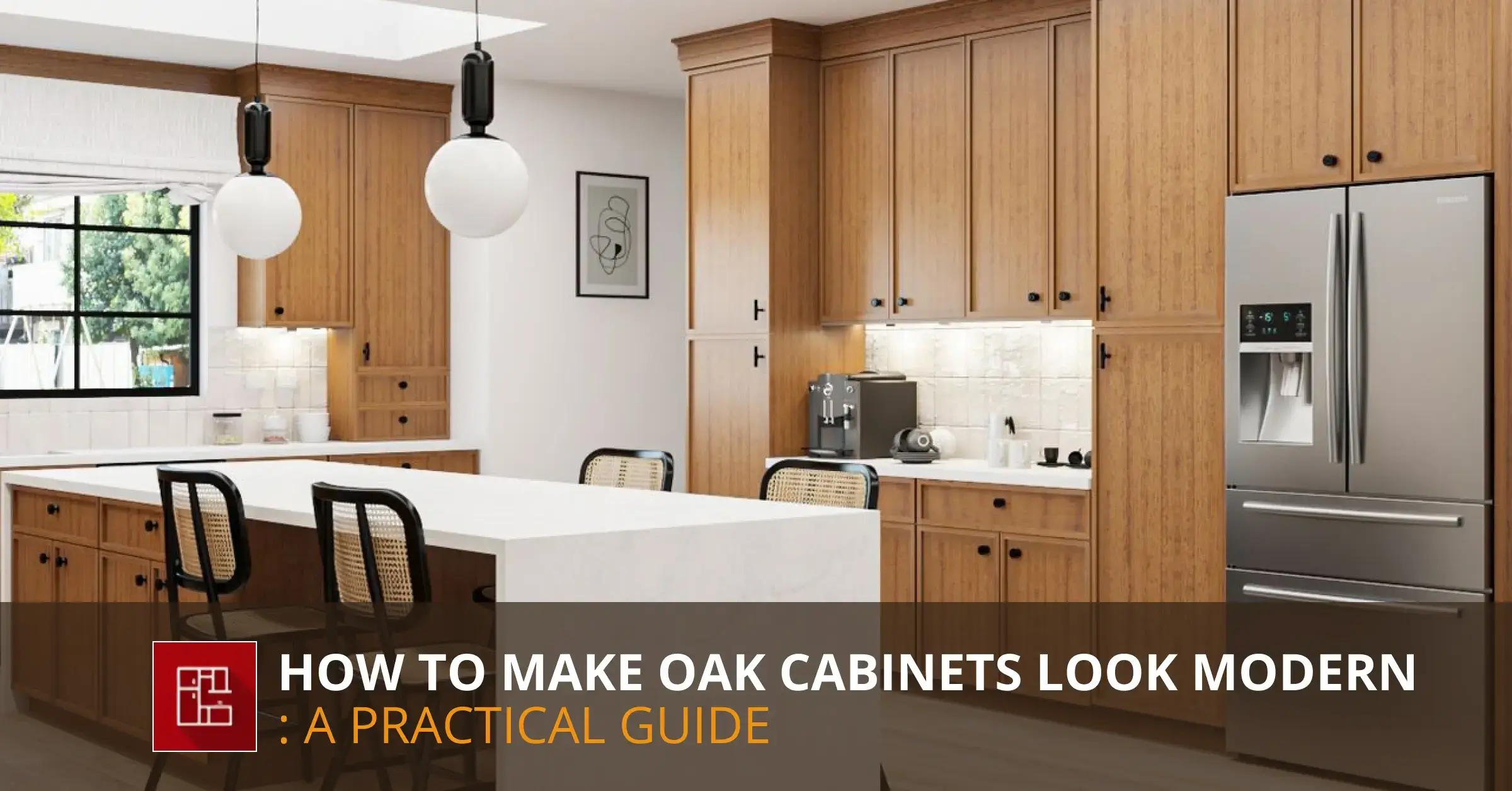
How to Make Oak Cabinets Look Modern: A Practical Guide
Oak cabinets get a bad reputation, but most of the time the oak is not the problem. The problem is everything around the oak. Dated hardware, the wrong wall color, fluorescent lighting, and a cool white tile backsplash will make even good oak look stuck in the past.
The good news is that pulling an oak kitchen into a modern look does not require painting the cabinets or ripping anything out. A handful of focused updates will do most of the work. This guide walks through what actually moves the needle, from the cheapest change you can make in a weekend to the bigger swaps worth saving up for. If your oak is too far gone to save, there are smarter ways to replace it than going straight to new kitchen cabinets.
Key Takeaways
- The door profile matters more than the wood color, with shaker doors easy to modernize and cathedral doors much harder
- New hardware in matte black, brushed brass, or champagne bronze is the single fastest update and takes one afternoon
- Wall colors like Revere Pewter, Sea Salt, and Balboa Mist balance honey oak, while pure white and cool gray make the orange worse
- Light quartz countertops and warm 2700K to 3000K lighting do more for an oak kitchen than almost any other change
- Skip white subway tile and polished chrome on oak, both push the wood toward looking more orange and dated
Start by Figuring Out What Type of Oak You Have
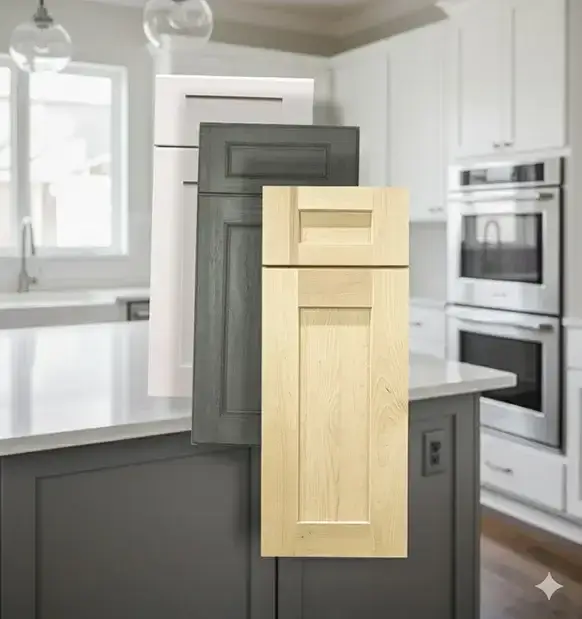
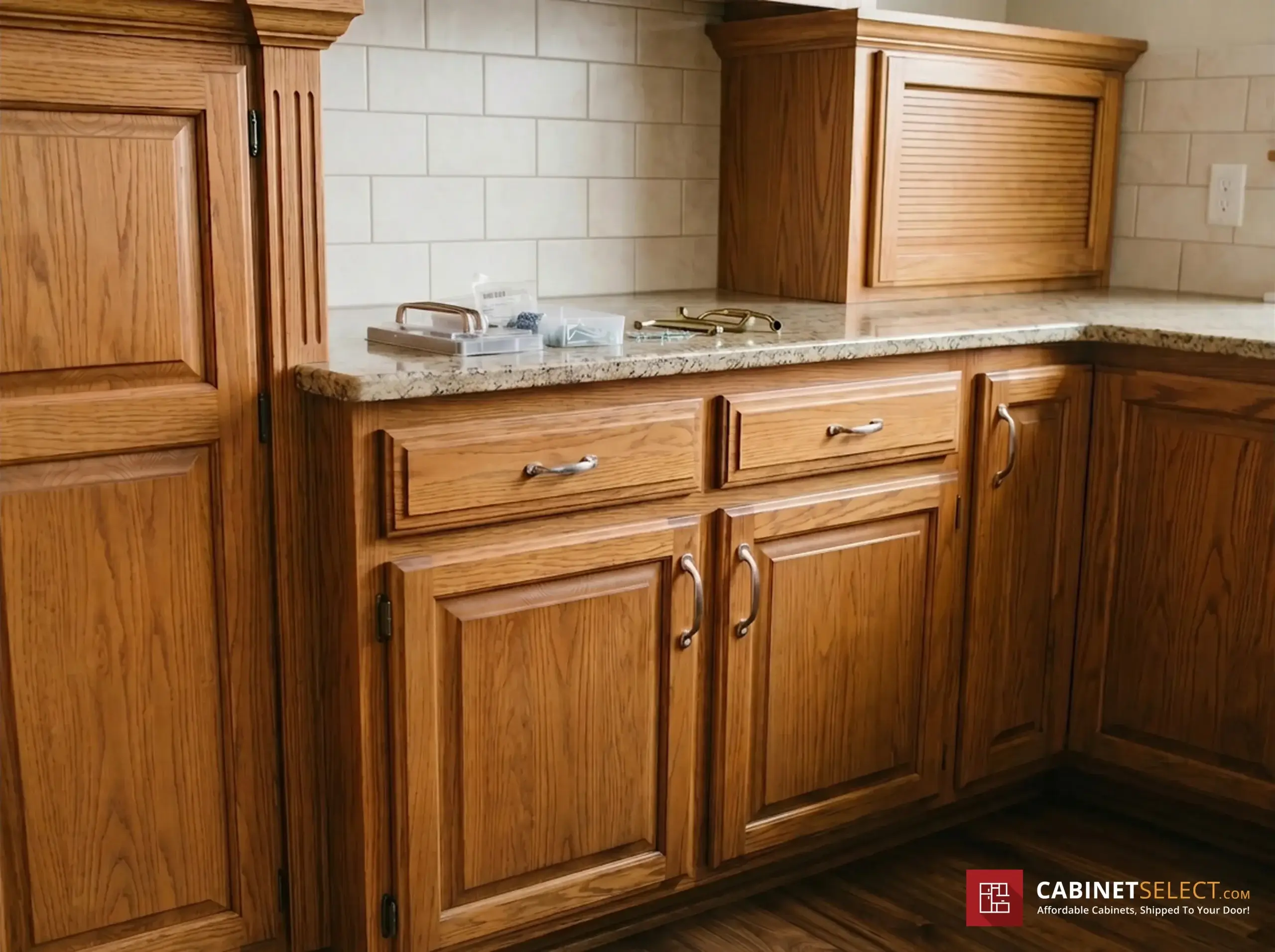
Before spending any money, look at the cabinet doors. The door profile matters more than the wood color when it comes to how modern the kitchen feels.
Shaker-style doors with a clean flat panel transition easily into a modern look. The lines are simple and the profile reads as current. Cathedral or arched raised-panel doors are harder to work with. Those curves are the strongest visual marker of an older kitchen, and no amount of new hardware will fully erase that. The oak itself can still look great in either case. The door shape just determines how much else you need to change to land a modern result.
The stain color is the second thing to check. Honey oak with strong orange or yellow undertones takes more work to balance than a more natural, neutral oak. Both can look modern with the right palette. Honey oak just needs cooler counterpoints to settle down its warmth.
Swap the Hardware First
This is the single fastest, cheapest, highest-impact change in the entire kitchen. Old oak cabinets often have small brass knobs, builder-grade chrome pulls, or no hardware at all. Replacing every knob and pull takes one afternoon and instantly shifts the look from old to current.
Three hardware finishes work especially well on oak:
- Matte black for strong contrast and a clean modern feel
- Brushed brass or champagne bronze for warmth that complements oak instead of fighting it
- Satin nickel for a softer, more neutral option that hides fingerprints
Shape matters as much as finish. Long linear bar pulls in the 96 to 160 millimeter range read as modern. Simple round or rectangular knobs work on doors. Avoid anything ornate, twisted, or shiny gold. Skip polished chrome on oak. It looks builder-grade and clashes with the warm wood tone.
Pick a Wall Color That Balances the Oak
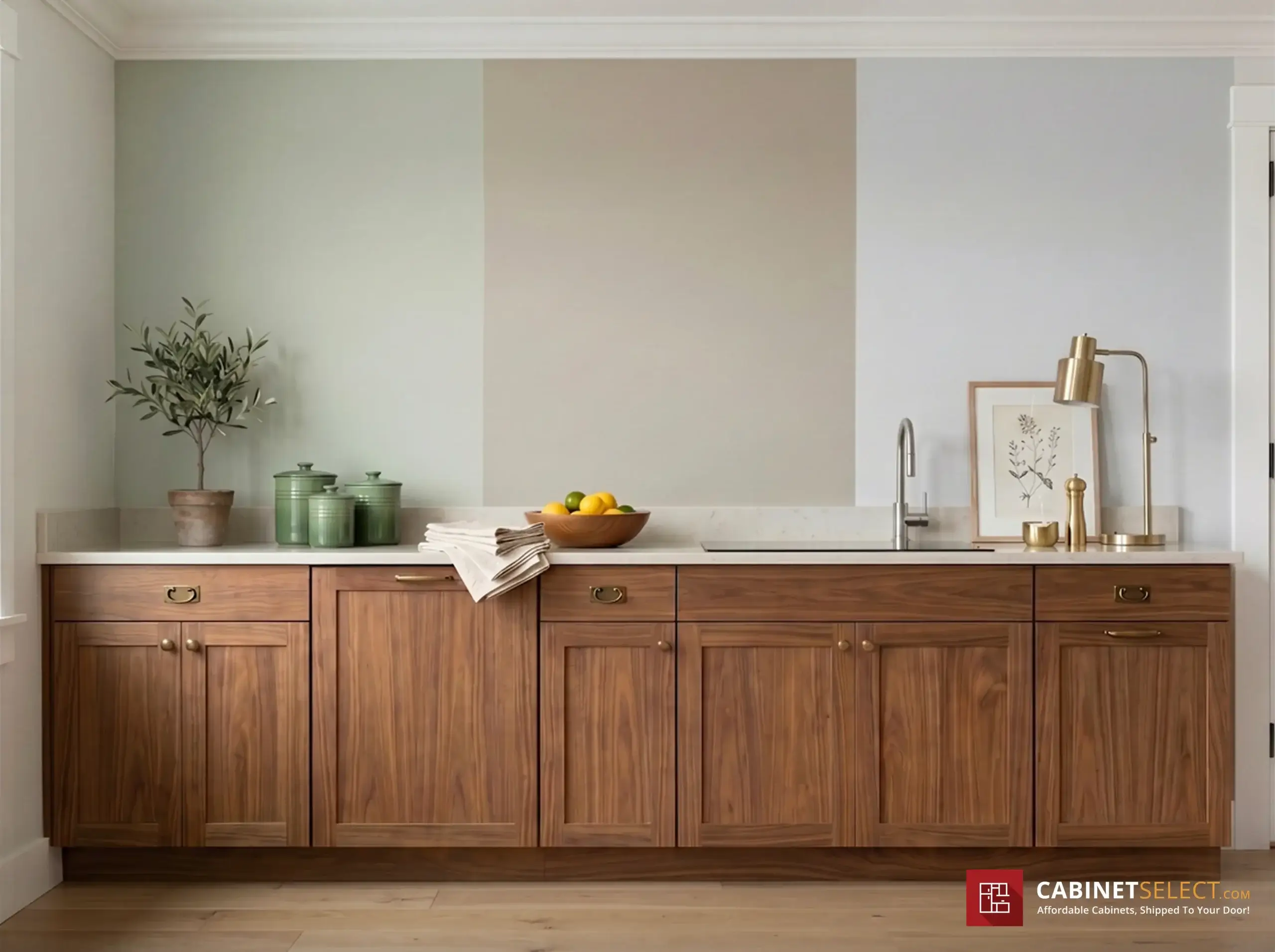
Wall paint changes how the oak reads more than people realize. The wrong color will make honey oak look more orange. The right one will quiet the warmth and let the wood feel intentional.
The trick is contrast. Oak leans warm, so cooler-leaning neutrals balance it. Soft greiges, muted sage greens, and warm grays with a slight green or blue undertone all work well. Deeper colors like charcoal or navy on a single accent wall can make oak feel rich and grounded instead of dated.
Three paint colors that consistently look good with oak:
- Benjamin Moore Revere Pewter for a warm greige that softens orange undertones
- Sherwin Williams Sea Salt for a muted green-gray that contrasts oak without fighting it
- Benjamin Moore Balboa Mist for a clean, slightly cool neutral that lets the wood take center stage
Avoid pure bright white walls next to honey oak. White amplifies the orange. Cool gray paint does the same. If a white wall is the goal, lean toward a warmer cream rather than a stark white.
Update the Countertops and Backsplash
Old laminate or dark speckled granite countertops are often what makes an oak kitchen feel dated, not the oak itself. New countertops in a cleaner material change the entire room.
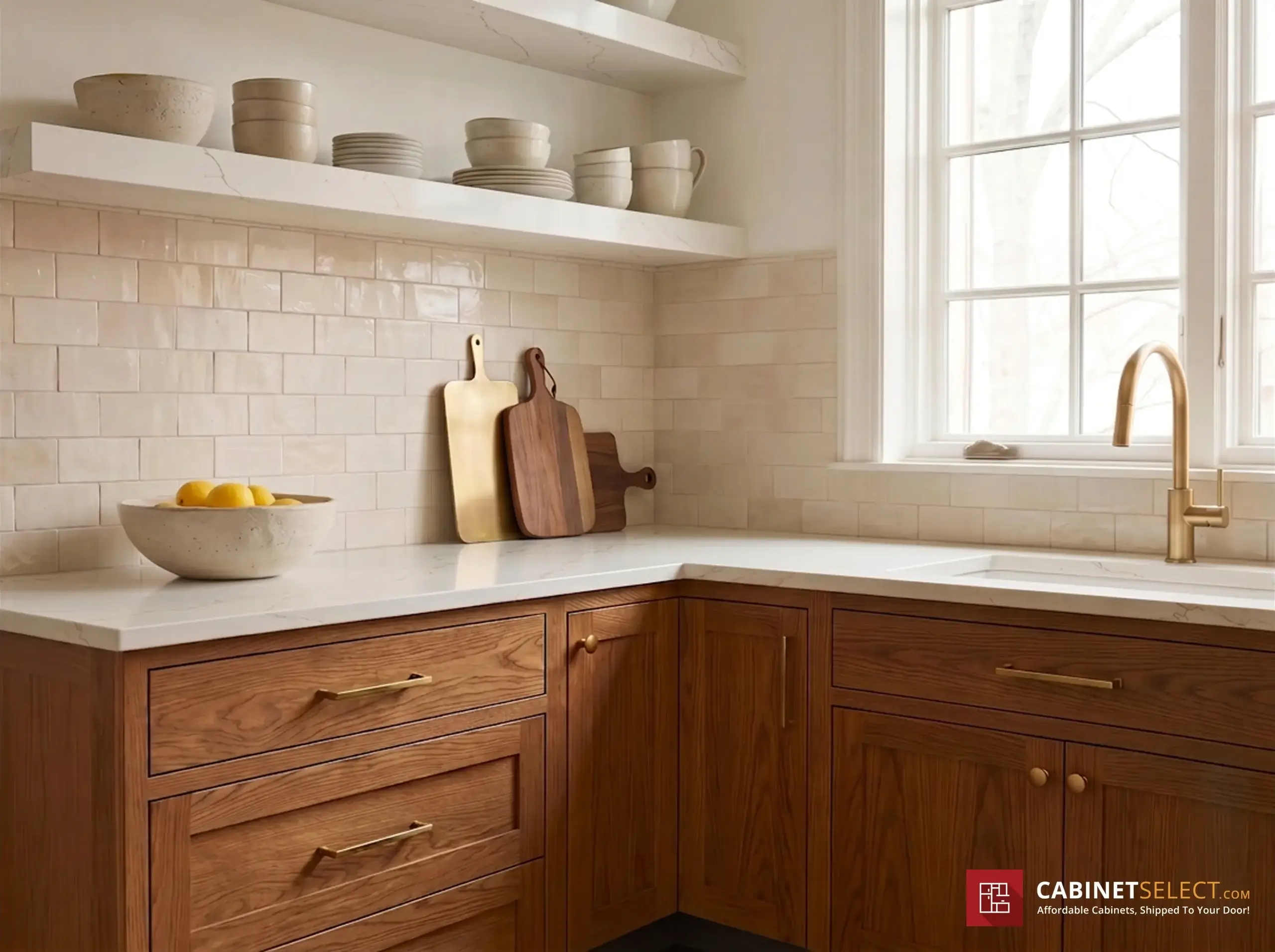
Light quartz with subtle veining is the most reliable choice for oak. It brightens the kitchen, adds modern pattern without competing with the wood grain, and pairs naturally with brass or black hardware. Soft gray quartzite is another strong option, especially with honey oak, because the cool stone tone balances the warm wood. Solid white quartz works too, as long as it has a slight warm or veined element rather than reading flat and clinical.
For the backsplash, skip plain white subway tile against honey oak. The contrast pushes the oak even more orange. Better options include zellige tile in a cream or soft green, a slab backsplash in the same stone as the counters, or a hand-glazed ceramic in a muted tone. Even a simple beige or warm gray subway tile reads better than bright white.
Fix the Lighting
Lighting changes how oak looks more than almost anything else. Fluorescent box lights and cool 4000K bulbs make oak look yellow and flat. Warmer light brings out the grain and softens the orange.
Three lighting updates make the biggest difference:
- Swap overhead bulbs to a warm 2700K to 3000K range. Same fixture, completely different feel.
- Add under-cabinet LED strips along the lower edge of upper cabinets. This lights the counters where the work happens and removes shadows that age the kitchen.
- Replace any fluorescent box light in the ceiling with recessed cans or a clean flush mount in matte black or brushed brass.
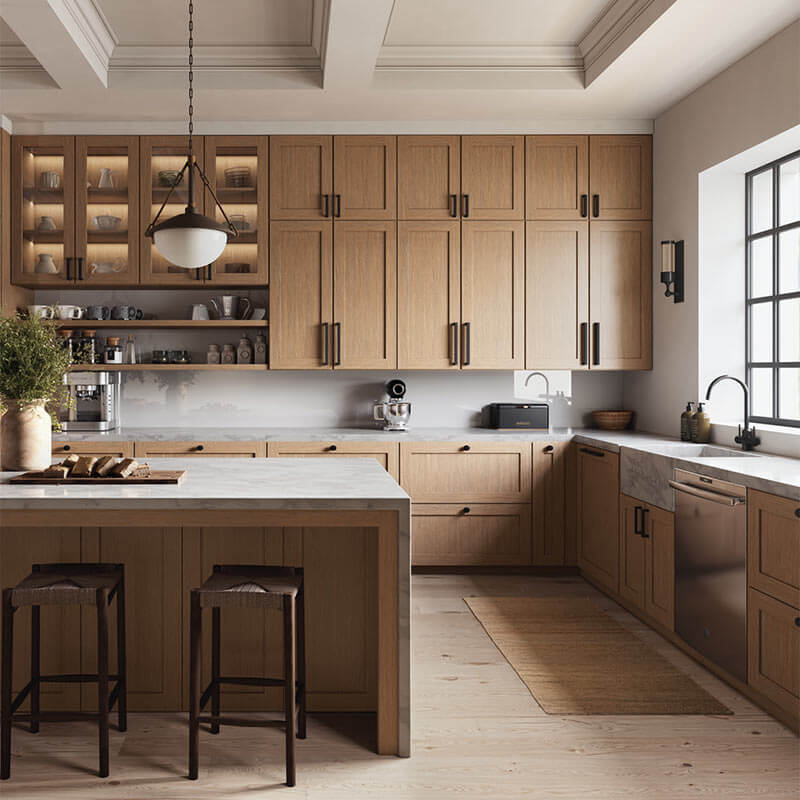
Pendant lights over the island are another high-impact upgrade. Black metal cages, smoked glass globes, or simple brushed brass shapes all pair well with oak. The goal is to add something with a clean modern silhouette that draws the eye upward.
Break Up the Oak With Glass or Open Shelves
A wall of solid oak doors can feel heavy, especially in a smaller kitchen. The fix is not removing the oak. It is breaking up the wood plane with something lighter.
Replacing the center panel of a few upper cabinet doors with glass inserts is a clean way to do this. Reeded or fluted glass adds texture and obscures the contents enough to still look tidy. Clear glass works if the dishes inside are worth showing.
Removing one section of upper cabinets entirely and replacing it with floating shelves is the bigger move. This opens up the wall, lets the backsplash breathe, and gives the kitchen a place to display real dishes, plants, or wood cutting boards. Shelves in a similar oak tone keep the wood story consistent. A contrasting black or walnut shelf reads more modern.
Add Layered Texture Through Decor
Once the structural updates are in place, styling carries the rest. Modern kitchens feel collected, not cluttered. The trick is to introduce two or three textures that contrast with the smooth oak surface.
A stone mortar and pestle on the counter. A linen tea towel folded next to the sink. A small wooden cutting board leaning against the backsplash. A ceramic vase with a single branch. These small touches add depth without competing with the cabinets. Mixed metals work the same way. If the hardware is matte black, a brass utensil holder or a copper pot adds warmth and intentionality. Keep it to two metal finishes at most. More than that starts to feel chaotic.
When It Makes More Sense to Replace the Oak
Some oak kitchens are past the point where surface updates will save them. The clearest signs that a replacement makes more sense than a refresh:
- Cathedral or heavily arched doors that fight every modern update
- Water damage, swelling, or warping around the sink base
- Loose joints, sagging shelves, or broken hinges across multiple cabinets
- A layout that does not work for how the kitchen actually gets used
Replacing oak does not mean abandoning the wood look. The most natural upgrade path is a clean modern oak line with a flat or slim shaker profile. The Homestead Oak Shaker line keeps the warm golden tone people love, but with a current door profile that pairs naturally with brass hardware and stone counters. The Petit Oak Shaker line sits more in the modern transitional lane, with a slimmer shaker frame that reads sleeker in smaller kitchens. Either option keeps the kitchen feeling like wood without the dated profiles that age an older oak kitchen.
Frequently Asked Questions
Are oak cabinets coming back in style?
Yes. Natural wood cabinets are one of the most requested finishes in current kitchen design, with oak leading the comeback. The version that feels dated is the heavy raised-panel oak with cathedral doors and orange-toned stain. Clean shaker-style oak with a more natural finish reads as modern.
What paint color hides the orange in honey oak?
Warm greiges, muted sage greens, and soft warm grays all balance the orange undertone of honey oak. Specific picks include Benjamin Moore Revere Pewter, Sherwin Williams Sea Salt, and Benjamin Moore Balboa Mist. Avoid pure bright whites and cool grays, which make the orange more obvious.
What countertop looks best with oak cabinets?
Light quartz with subtle veining is the safest and most modern choice. Soft gray quartzite also works especially well with honey oak because the cool stone tone balances the warm wood. White quartz with a slight warm or veined element pairs cleanly with both honey and natural oak.
Should I paint my oak cabinets or keep them?
If the cabinet doors are shaker or flat panel and the oak is in good condition, keep them. Modernizing the surroundings will give a better result than painting over the wood grain. If the doors are cathedral or arched, painting will not fully solve the dated profile, and replacing the doors or cabinets makes more sense.
What hardware looks best on oak cabinets?
Matte black, brushed brass, and champagne bronze are the three finishes that consistently look modern on oak. Long linear bar pulls in the 96 to 160 millimeter range work best on drawers and lower cabinets. Avoid polished chrome and shiny yellow brass, which both read dated against oak.
ABOUT THE AUTHOR

Chris is Director of Product & Design here at CabinetSelect.com. He's certified as a Florida State Building Contractor (CBC1256670) with many years of construction experience. Most important, Chris is passionate about kitchen design – Whether you're building a new home or remodeling an old one, he has plenty of experience and the right tools, ideas and solutions to help create a beautiful kitchen in any space, large or small.